Product
Webhooks infrastructure platform
Case Study
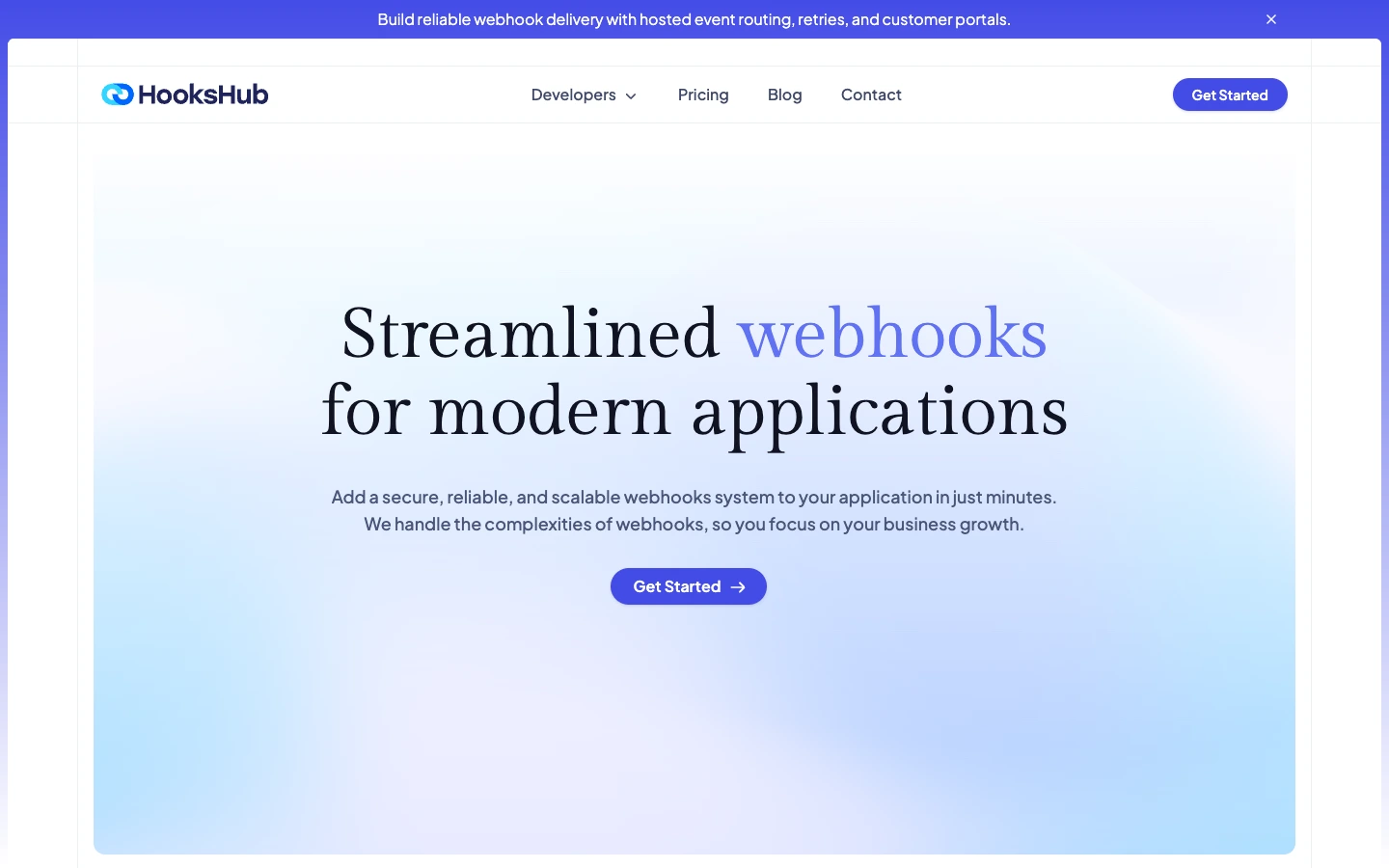
We helped design and build a platform for reliable delivery, signed payloads, retries, and customer-managed webhook endpoints.
Product
Webhooks infrastructure platform
Audience
Developers, SaaS teams, product teams, platform teams
Our Role
Strategy, product, design, frontend, backend, infrastructure
Tech Stack
Vue 3, Vite, NestJS, PostgreSQL, MikroORM, Redis, LavinMQ, S3, Stripe
The Challenge
Webhooks look simple at the API boundary, but the production system behind them is not. Teams need event modeling, endpoint management, secure signing, retries, observability, customer-facing configuration, and failure handling.
Hookshub needed to package that infrastructure into a product that felt straightforward for developers to integrate and clear enough for customers to manage their own webhook destinations.
Our Approach
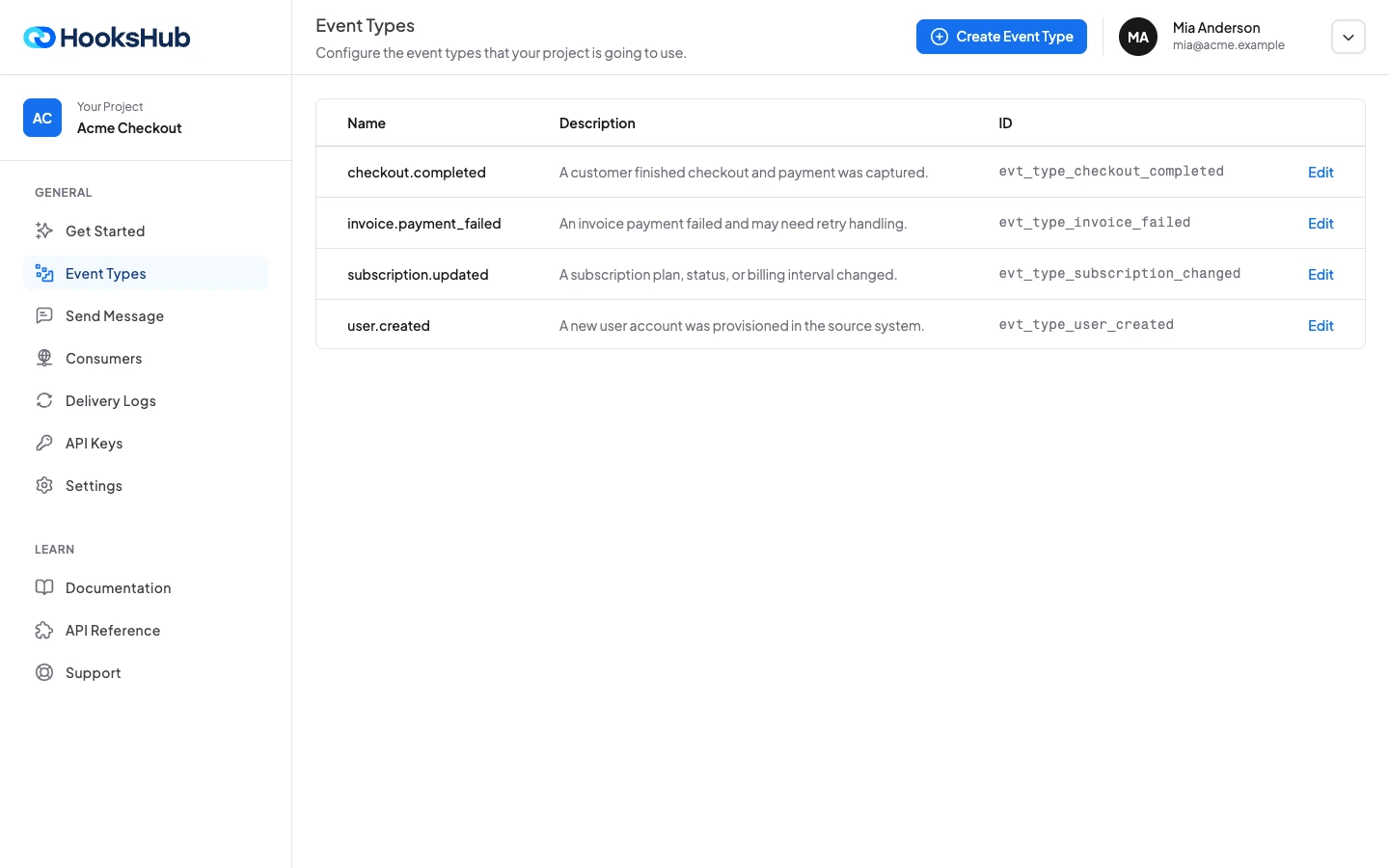
We shaped the platform around event types, consumers, endpoints, and messages so teams could map real product events to reliable webhook delivery without exposing unnecessary infrastructure complexity.
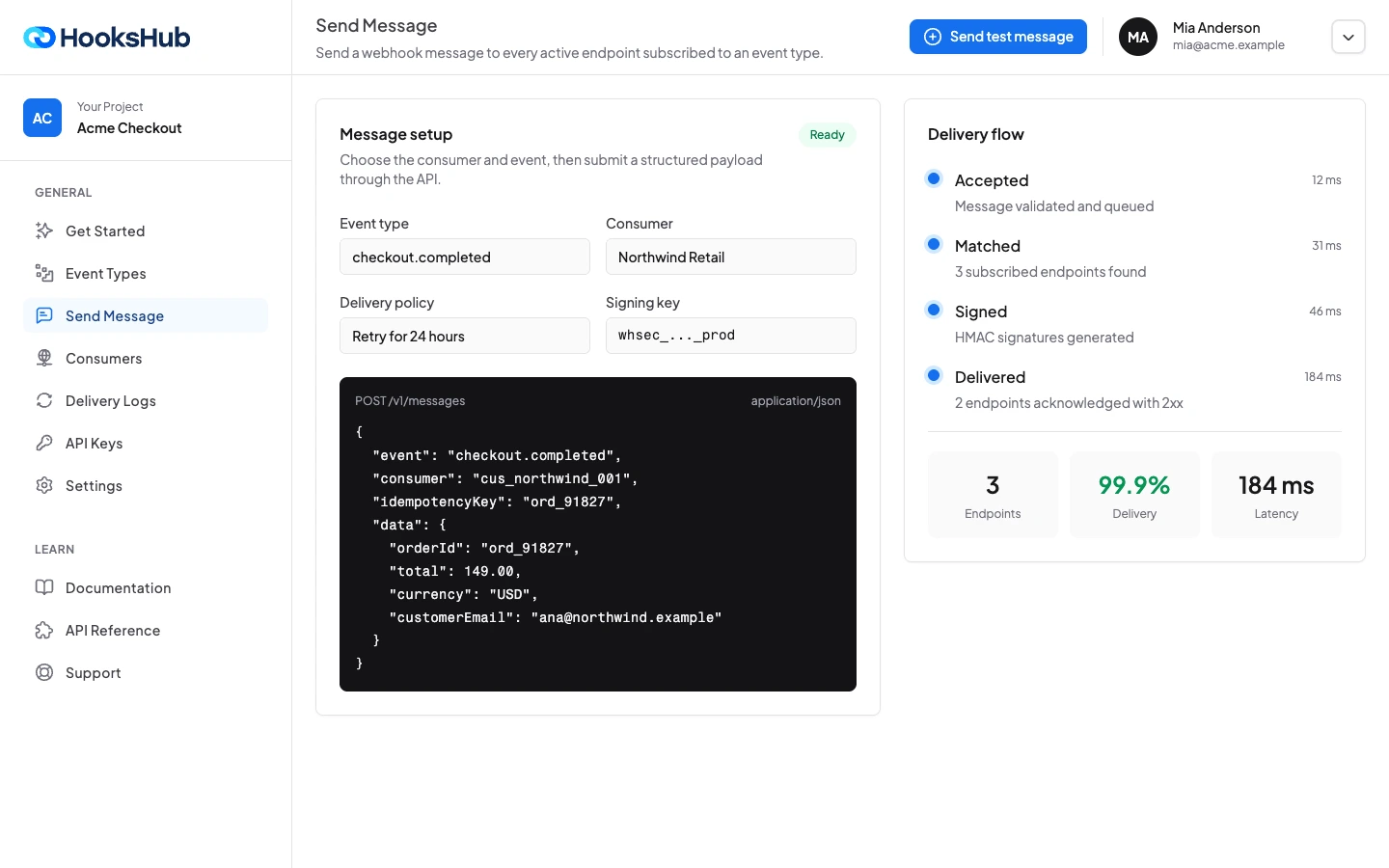
The API makes webhook delivery feel like sending a message: teams authenticate with an API key, send an event payload, and let Hookshub route it to the right consumers and endpoints.
We built the dashboard, API, worker queues, retry flow, signed delivery, white-label portal, billing foundations, documentation, and deployment structure needed to run the product.
The Outcome
The final product gives teams the pieces needed to offer webhooks as a mature product feature: define event types, create consumers, let customers manage endpoints, send messages through the API, and rely on queues, signing, and retries for delivery.
Event type setup for defining the webhook events a product can emit.
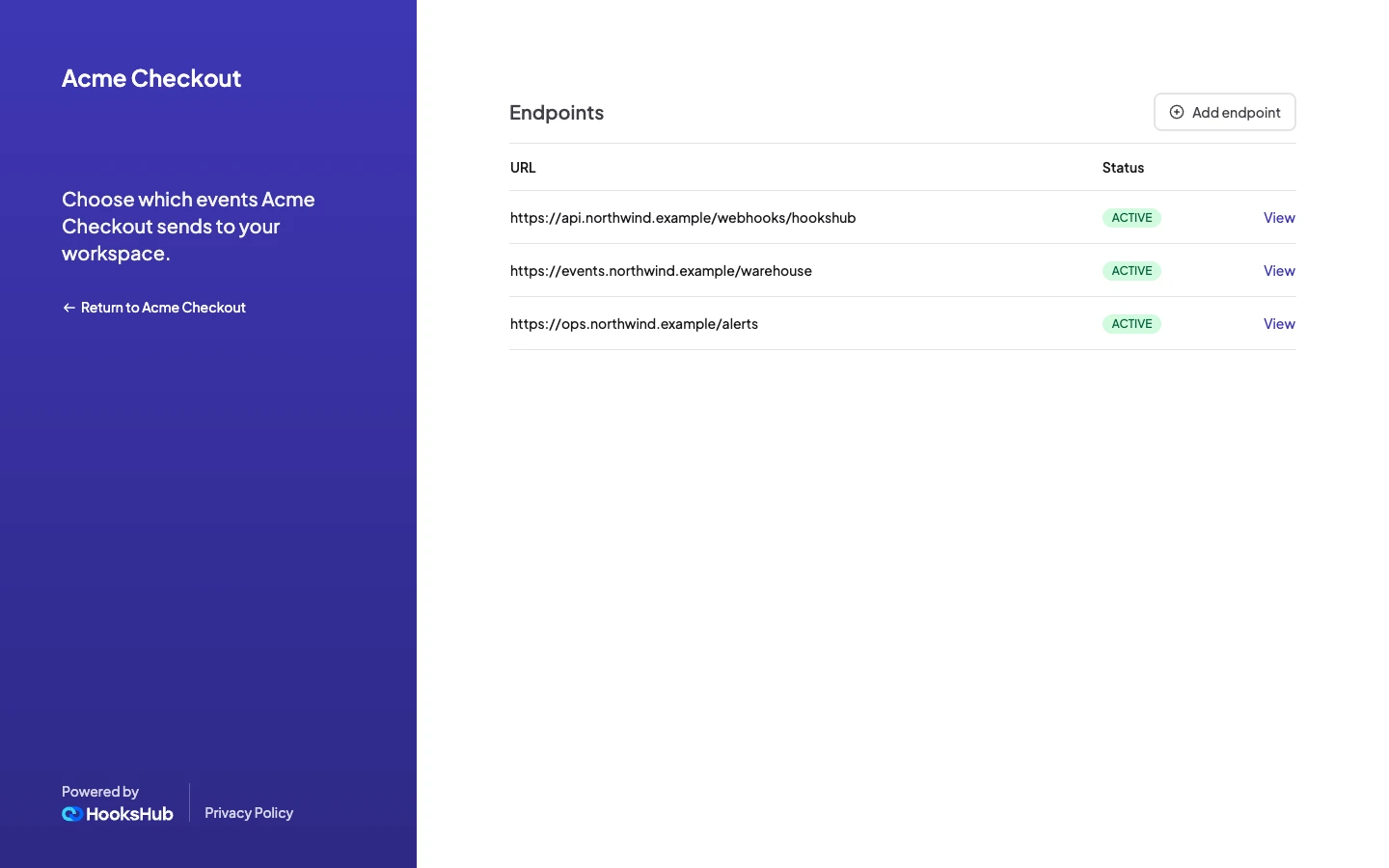
Consumer and endpoint management for routing events to each customer destination.
API-triggered webhook fan-out to targeted consumers or the full customer base.
Signed webhook payloads with delivery headers for secure verification.
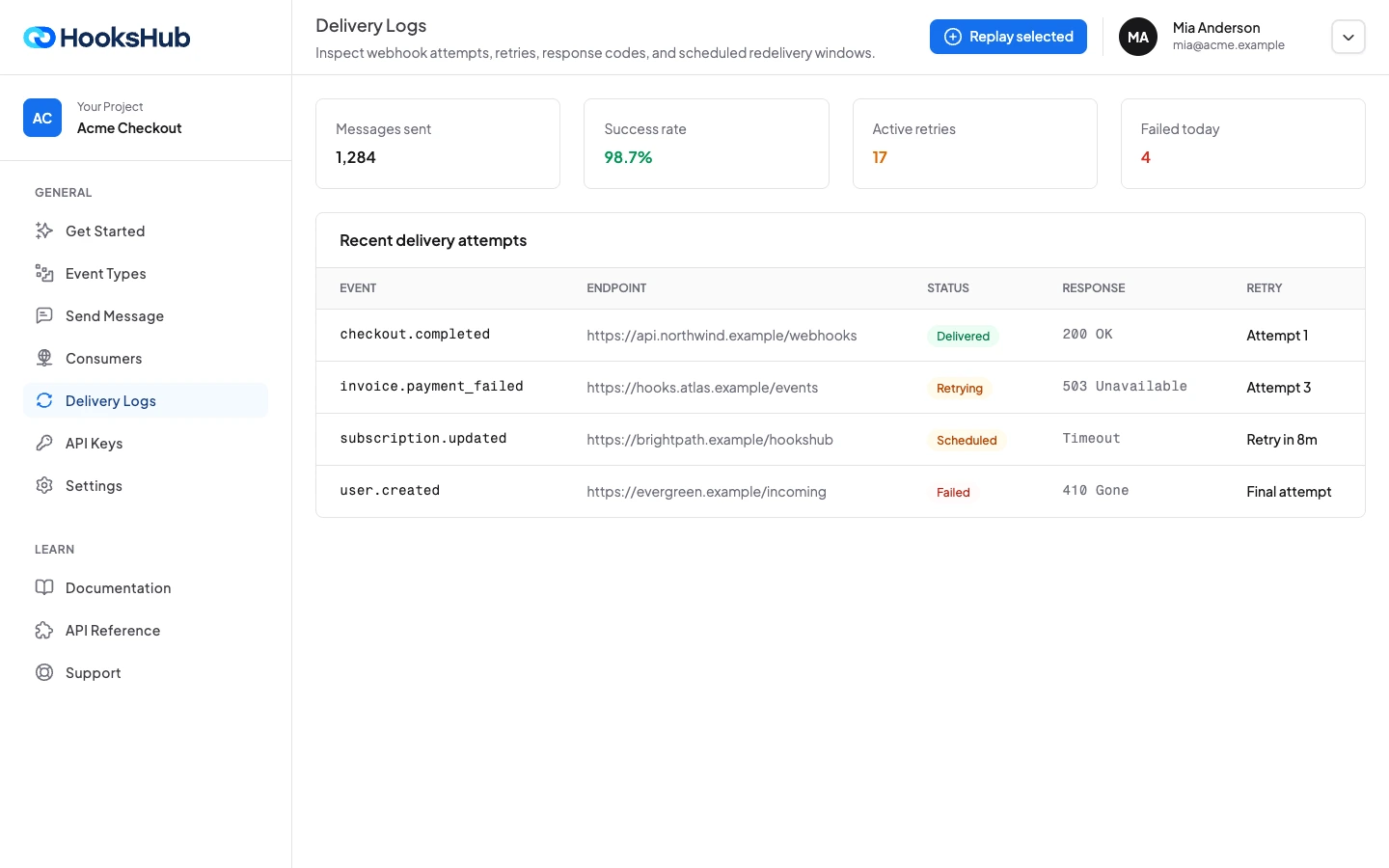
Retry queues for resilient delivery when customer endpoints fail or time out.
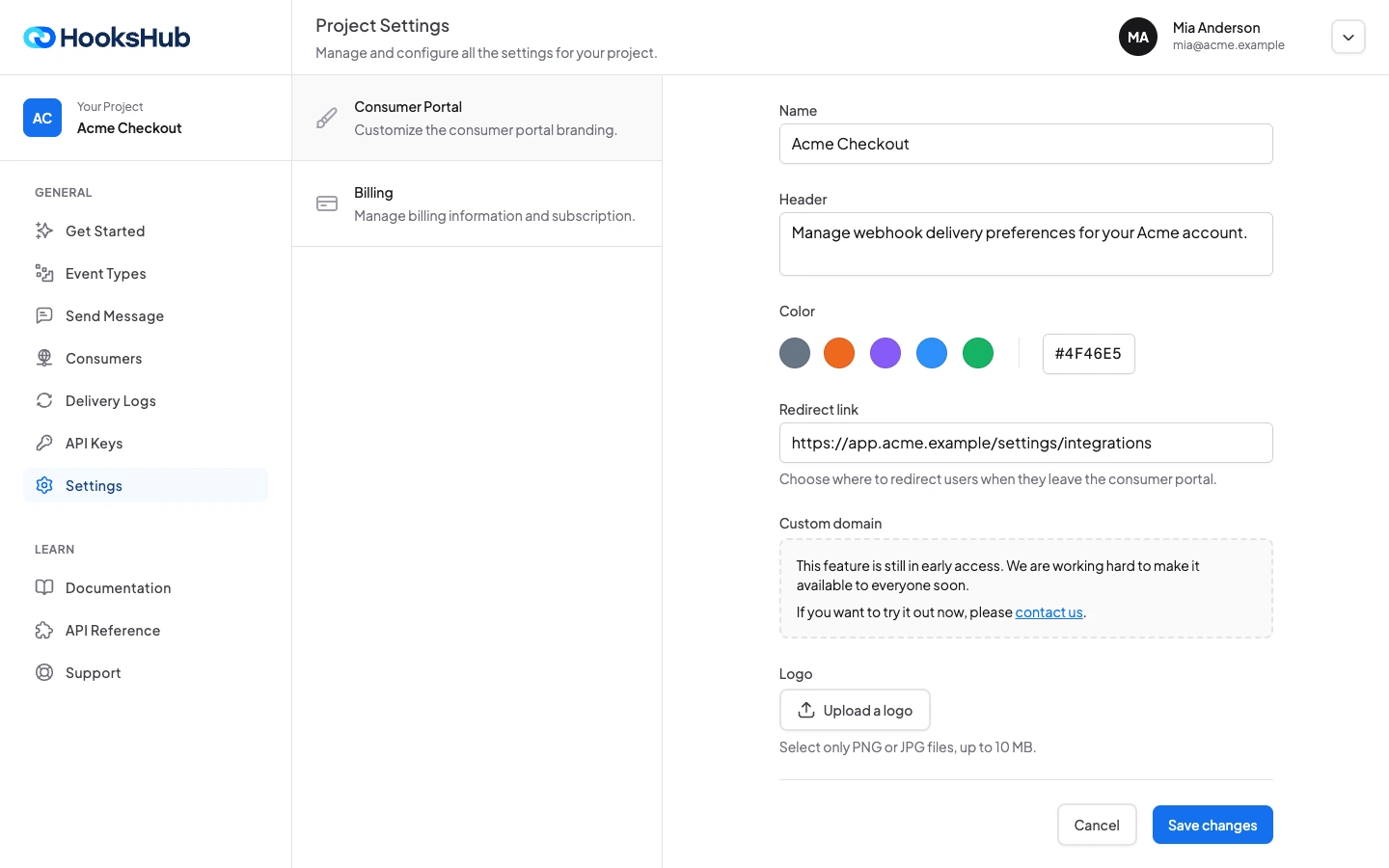
White-label consumer portal sessions for customer-managed webhook endpoints.
Ready To Build?
Bring the idea or the roadmap. We'll handle the technical side, so you can focus on your business.